Research & Article
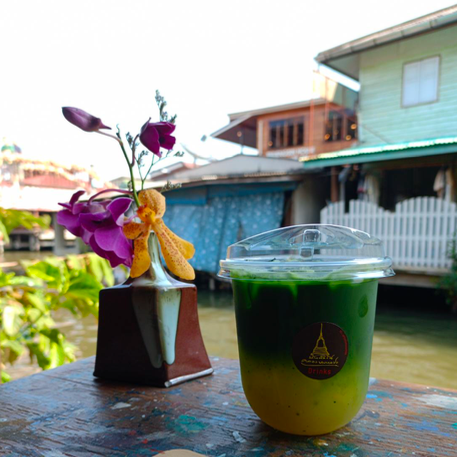
Khlong Bang Luang: Development and Cultural Tourism Impacts
By Phimchanok Bunphu, Sowatree Nathalang
Published on 19 July 2026
Cultural Tourism
Location of original sources
Journal of Thai Studies (JTS), Vol. 21 No. 2 (2025): December
Background and objective (s): In the post-COVID-19 pandemic era, “cultural tourism” has experienced significant revitalization as an instrumental means for physical and psychological recuperation among contemporary populations. Khlong Bang Luang represents one of the historic settlements situated along the Bangkok Yai Canal, with historical origins extending to the Ayutthaya period, while still maintaining its traditional way of life. Consequently, this locale has emerged as a prominent cultural tourism destination. This research aimed to study the development of Khlong Bang Luang from the past until its transformation into a cultural tourism site, tourism impacts that are both positive and negative, and the resilience mechanisms that have enabled the community to sustain its identity amid socio-cultural transformations.
Methodology: This study employed a qualitative research methodology through in depth interviews with target study groups, participant observation and a comprehensive review of literature.
Main result: Khlong Bang Luang has undergone extensive development over its history, serving as a crucial trade route from the Ayutthaya period through the early Rattanakosin era, before declining in prominence with the development of land transportation during the reigns of King Rama IV and V. Subsequently, the "Artists' House" has played a pivotal role in revitalizing the community as a cultural tourism destination. This transformation has generated both positive impacts, such as increased local income, community vitality, occupational opportunities for elderly residents that have enhanced their self-worth and the preservation of the traditional way of life and cultural practices, and negative impacts, such as elevated land values, misinterpretations of the tourism site’s identity and overlapping residential and tourist spaces. Nevertheless, Khlong Bang Luang has maintained its continuity through community potential, cross-sectoral collaboration and local participation, representing social capital that preserves community identity amid ongoing transformations.
Relevance to Thai Studies: Khlong Bang Luang represents a case study examining the development of a traditional Thai community rooted in riverine lifestyles toward its transformation into a cultural tourism destination. This evolution reflects the dynamic nature of Thai society and culture, as well as the role of social and cultural capital in community adaptation and resilience amid change. This case study demonstrates the application of the body of knowledge in Thai Studies in terms of a traditional riverine Thai way of life, including a community’s dynamism and transformation to understand contemporary societal transitions in Thai society.
Conclusion: The transformation into a cultural tourism destination involves not only the presentation and preservation of existing heritage, but also the construction of new identities to meet tourist expectations. The combination of cultural and social capital can facilitate the development of distinct identities that gain widespread recognition, while simultaneously enabling communities to achieve strong and sustainable long-term growth.