Research & Article
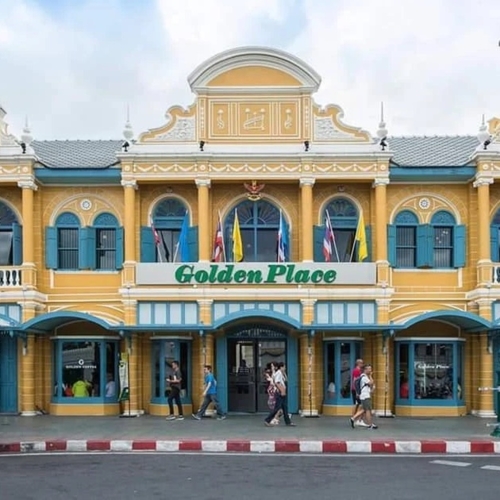
A Formulating Gentrification of Architecture Concepts: Retroactive and Progressive Approaches
By Tonkao Panin, Phuttachart Rattanawong
Published on 21 July 2026
Architecture, Gentrification
Location of original sources
Journal of Faculty of Architecture and Design RMUTP, Vol. 4 No. 2 (2025): July-December 2025
The phenomenon of gentrification has affected the economy, society, culture, and physical environment, causing population displacement and higher living costs. It has also directly influenced architecture in these areas, both by enhancing and reducing the city’s potential. Some buildings have lost their original identity, while others have become key elements in urban revitalization and in driving new urban economies. This research aims to classify the concepts and forms of architecture that emerge under gentrification, to understand the boundaries and trends of contemporary architectural design in changing urban contexts through identity, culture, and economy. The study focuses on urban districts where gentrification is clearly evident in Bangkok and its metropolitan areas, including Phra Nakhon, Khaosan Road, Banglamphu, and Tha Chang, as well as newly developed areas that combine urban memory with modern progress. The sample comprises nine buildings with diverse architectural characteristics, such as conservation architecture, nostalgic architecture, non-identity architecture, displacement leisure architecture, revitalization architecture, neo-liberal architecture, neo-futuristic architecture, and sustainable architecture. The research employs a qualitative approach through field surveys, photo documentation, and document analysis. It applies the theories of semiotics, nostalgia, and gentrification, together with an interpretation of architectural meaning, to understand the role of architecture in urban transformation. The analysis shows that architectural works in gentrified areas can be divided into two main tendencies. The first is the Retroactive gentrification potential, which includes four types of architectural expression: 1) Conservation Architecture, 2) Nostalgic Architecture, 3) Non-Identity Architecture, and 4) Displacement Leisure Architecture. The second is the Progressive gentrification potential, works, which includes four types of architectural expression: 1) Revitalization Architecture, 2) Neo-liberal Architecture, 3) Neo-futurist Architecture, and 4) Sustainable Architecture. The findings show that architecture in the context of gentrification is not just a physical structure, but serves as a medium that reflects the link between identity, culture, and the modern economy.