


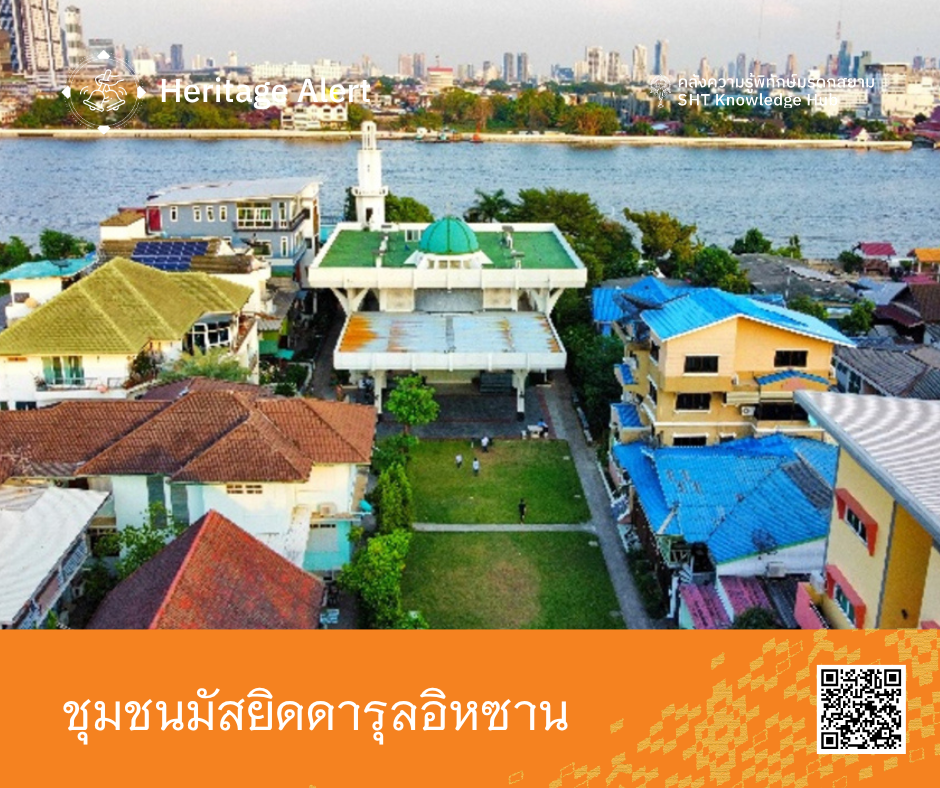
Heritage Alert: Bang Phlat Community – Accompanying Texts
Amid concerns over the proposed 3.5-kilometre Chao Phraya Riverside Development Project and the potential risks posed to historic houses, religious sites and the cultural landscape of riverside communities in Bang Phlat district, Bangkok, local communities have come together in response to document historical evidence and assess potential risks in order to safeguard their heritage. This case highlights the importance of community engagement, access to information and legal mechanisms in shaping the future of historic neighbourhoods.
Along the Chao Phraya: From Floating Communities to a Multicultural Trading District
As a part of Bangkok’s historic landscape, the western bank of the Chao Phraya River in Bang Phlat district reflects more than a century of urban development and the enduring relationship between people and the river. Before the expansion of roads and land-based transport, the Chao Phraya served as a major artery for travel, trade and settlement, allowing riverside communities to grow, shaping their economic, social and cultural life.
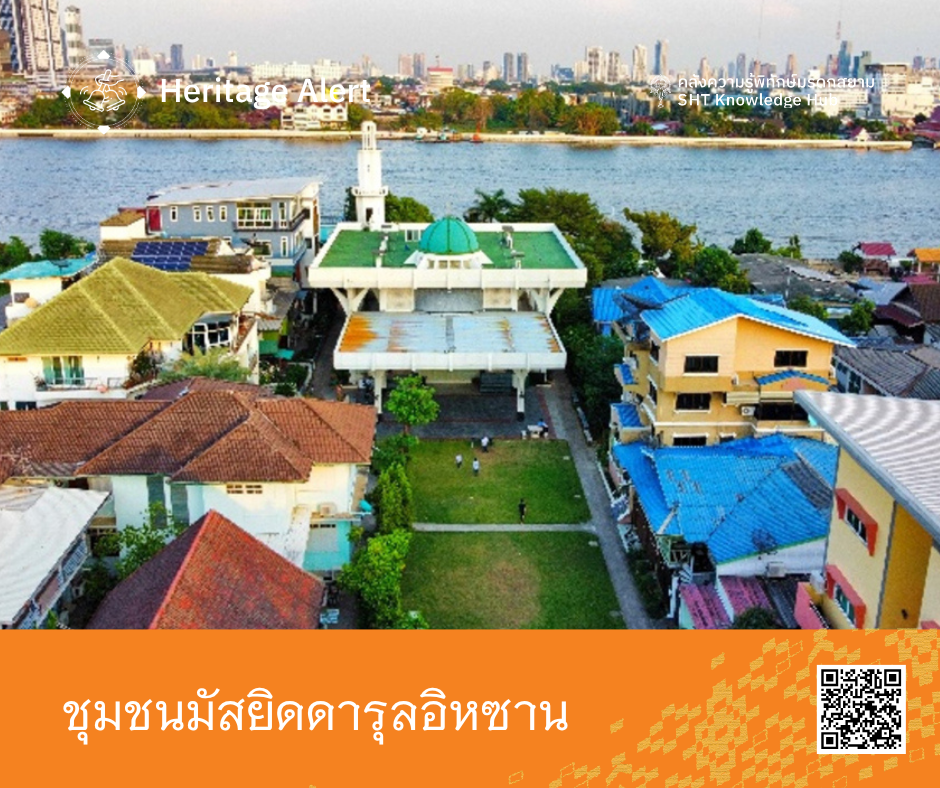
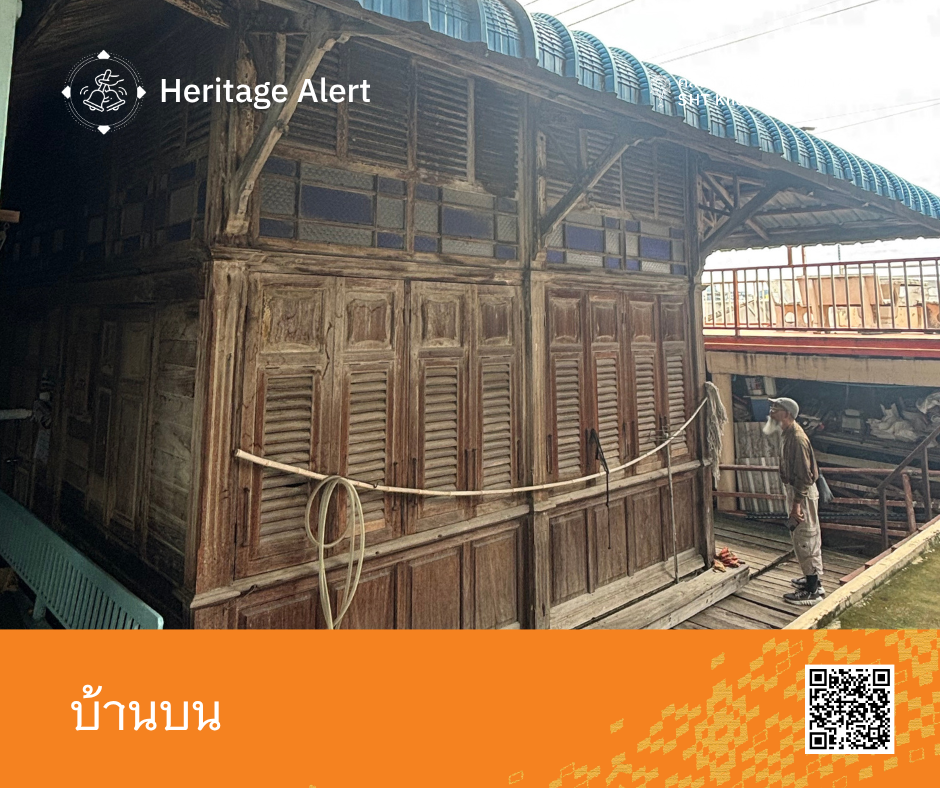
 One of the area’s historically significant communities is the Bang-Aw Muslim community. According to local accounts, their ancestors migrated from Ayutthaya and the surrounding areas following the city’s second fall in 1767. Closely associated with river trade, particularly the timber industry, they became known as the Khaek Phae (floating-houseboat Muslims), living on rafts that served as homes, places of worship and workplaces. As Siam’s international trade expanded, particularly following the Bowring Treaty of 1855, the timber trade and river transport grew significantly. Bang-Aw became part of the Chao Phraya’s timber trading network, where logs were transported, assembled into rafts, traded, processed and shipped. Several prominent timber-trading families played an important role in this development.
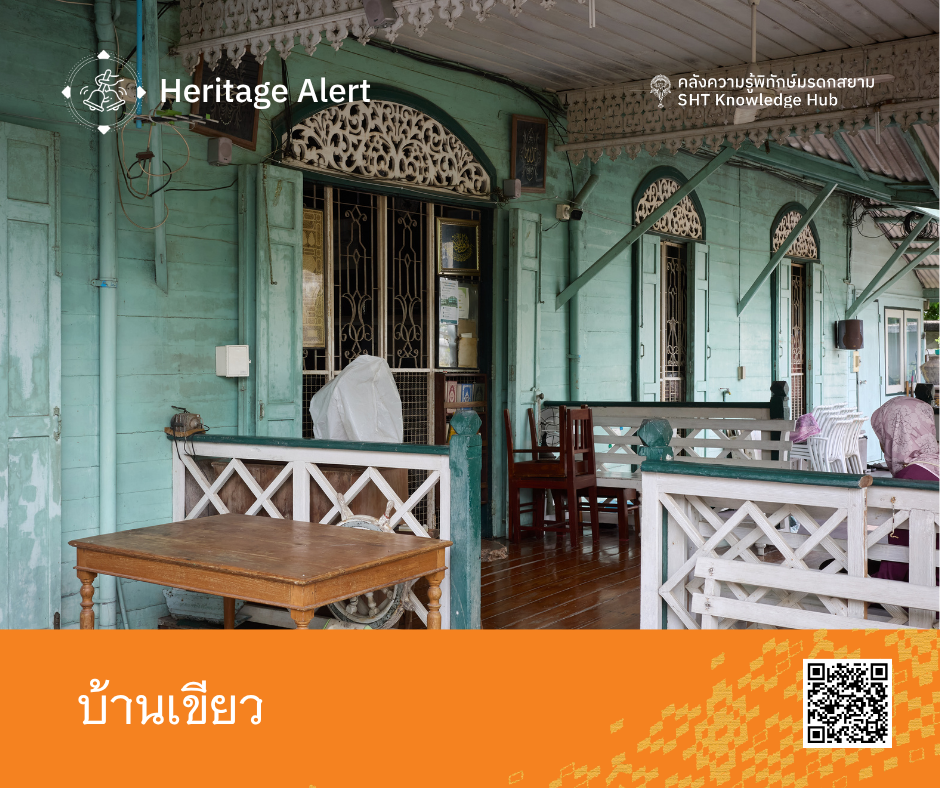
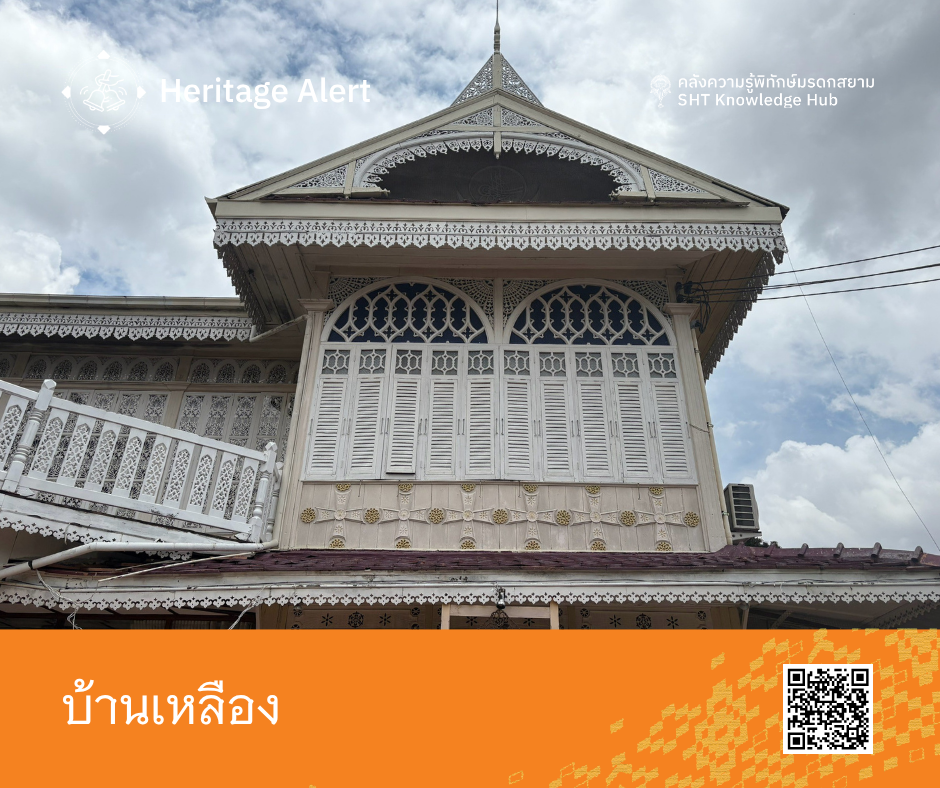
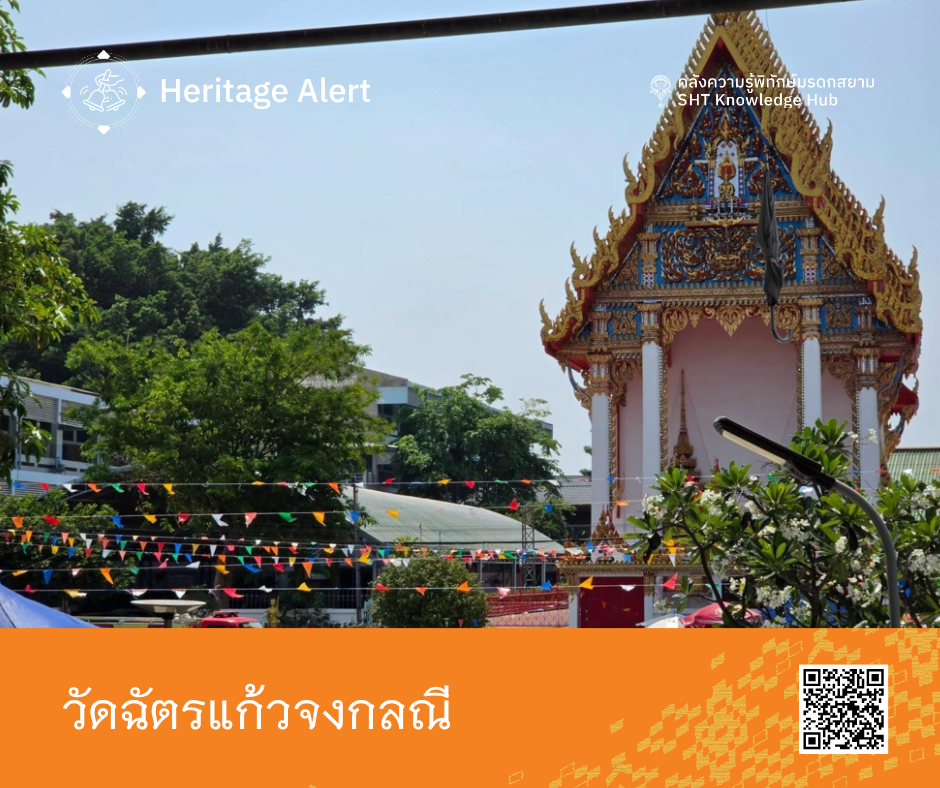
 Over time, residents gradually moved from floating homes to permanent houses on the riverbank, establishing more settled communities. Traces of this transition remain in historic wooden houses dating from the late reign of King Rama V to the early reign of King Rama VII. Another important landmark is Bang-Aw Mosque, whose masonry structure was completed in 1919 which continues to serve as a religious and cultural centre for the community. Bang Phlat community is also home to long-established Buddhist communities, including the Wat Chat Kaew Chongkolnee community which grew since the early Rattanakosin period.
Legal Lessons: What Rights Are Available to Communities to Protect Their Heritage?
Thailand has several laws that recognise the rights of individuals and communities to safeguard their heritage, participate in development projects, and scrutinise the use of public spaces. Based on the legal recommendations of Associate Professor Pongsawat Aksornsawas, a legal expert, member of The Siam Society’s Heritage Protection Committee, and Vice President (Legal Affairs) of the Association for the Conservation of Arts and Environment, the following key points offer practical guidance that other communities may also find useful.
- Communities have the right to preserve their heritage and call for a review of development projects
Sections 43 (1) and (3) of the Constitution of the Kingdom of Thailand B.E. 2560 (2017) recognise the rights of individuals and communities to conserve, restore and promote arts, culture and local traditions, as well as the rights of communities to submit collective petitions calling on government agencies to take action, or refrain from taking action, where such action may affect the peaceful way of life of a community. Government agencies are required to consider these proposals and provide opportunities for relevant members of the public to participate in accordance with the law.
Accordingly, if a community believes that a development project may adversely affect its cultural heritage, its members can collectively submit a proposal to the responsible authorities, requesting that the project be reviewed, modified or suspended to allow for a more comprehensive assessment of its potential impacts.

- Communities can file complaints with the National Human Rights Commission of Thailand (NHRC)
Section 26 (1) of the Organic Act on the National Human Rights Commission B.E. 2560 (2017) empowers the NHRC to investigate alleged human rights violations and recommend measures for prevention, resolution or remedy to the relevant authorities.
Where a development project may affect community rights, ways of life or cultural heritage, members of the public can submit a complaint to the NHRC, supported by relevant evidence, and request recommendations on measures to prevent damage. This may include requesting that the project be suspended while an investigation is underway. However, filing a complaint does not automatically result in the suspension of a project.
- Development projects must comply with urban planning laws
The Town Planning Act B.E. 2562 (2019) establishes the framework for urban planning and land use, requiring government agencies to ensure that development projects comply with applicable town plans and regulations.
Communities should therefore examine the designated land-use classification of the proposed development area, identify the relevant land-use restrictions, and assess whether the project complies with these requirements. They should also review whether the public consultation processes associated with the preparation of town plans have been properly conducted.
- Riverside construction must comply with laws governing waterways and public land
Section 117 of the Navigation in Thai Waters Act B.E. 2456 (1913) stipulates that the construction of buildings or other structures encroaching upon rivers or public waterways requires permission from the Marine Department, in accordance with the applicable legal requirements. Meanwhile, Section 1304 (2) of the Civil and Commercial Code classifies riverbanks and waterways used by the public as public domain property of the State.
Communities can therefore scrutinise construction boundaries, the legal status of riverside land, permits issued by relevant authorities, and potential impacts on public access and the use of public spaces. Such assessments must also take into account the ownership boundaries and legal status of each individual area.
- Archaeological sites and religious places are subject to distinct legal protections
The Act on Ancient Monuments, Antiques, Objects of Art and National Museums B.E. 2504 (1961), as amended, provides an important legal framework for the protection of ancient monuments, particularly where construction may affect the structures or heritage values of officially registered sites.
For temples and other religious places, relevant specific legislation must also be considered, such as the Sangha Act B.E. 2505 (1962), as amended, in the case of Buddhist temples.
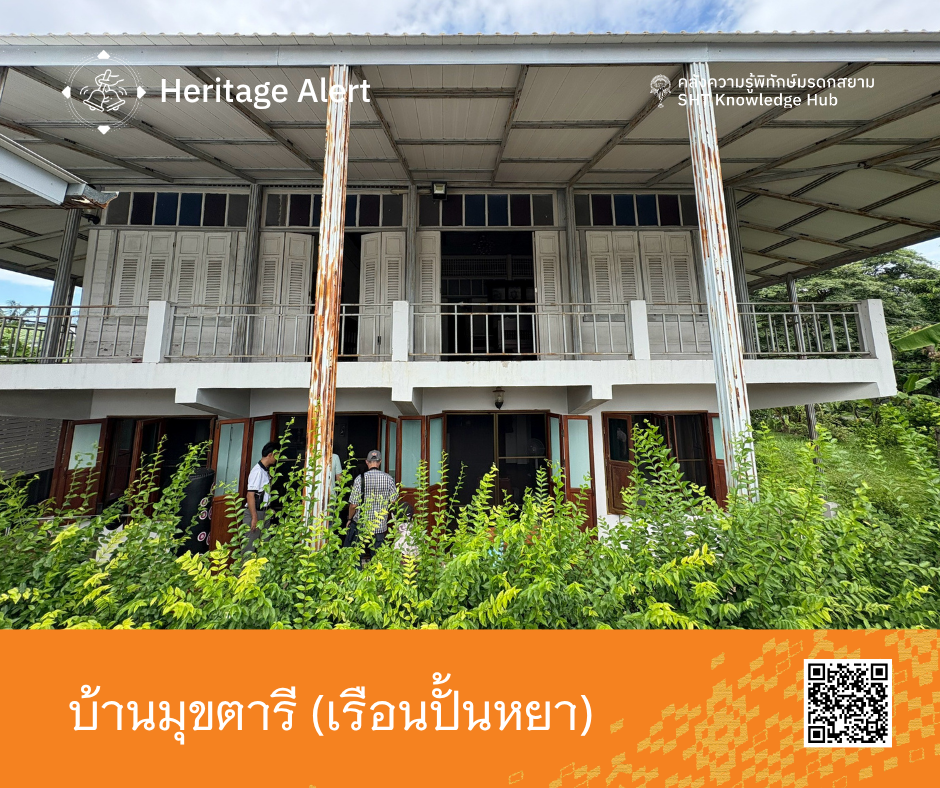
However, historic buildings that have not been officially registered as ancient monuments may still hold significant cultural heritage value. Communities should therefore gather historical and architectural evidence to support requests for the relevant authorities to assess their significance and consider appropriate protection measures.
- Members of the public have the right to request information about development projects from government agencies
The Official Information Act B.E. 2540 (1997) guarantees the public’s right to access information held by government agencies. Key provisions include:
– Section 9 (3) requires government agencies to make their ongoing plans, projects and annual expenditure budgets available for public inspection. Members of the public are also entitled to request copies of these documents, subject to the conditions prescribed by law.
– Section 11 allows members of the public to submit requests for other information held by government agencies, such as construction plans, study reports and supporting documents used in project deliberations. Agencies are required to process such requests within a reasonable period, subject to legal exemptions from disclosure.
– Section 12 requires an agency receiving an information request to assist the applicant by directing them to the appropriate agency if the requested information is not under its custody.
– Section 13 recognises the right to lodge a complaint with the Official Information Commission if an agency fails to make information available for inspection, provide requested documents, or responds with unreasonable delays.
This legislation is therefore an important tool that enables communities to scrutinise development projects, including construction plans, budgets and potential impacts on their local areas. Access to information at an early stage allows communities to gather evidence, assess potential risks and participate in consultations with government agencies on an informed basis.
- Gathering information and evidence is an essential first step towards exercising legal rights
Beyond understanding the relevant laws, communities should collect evidence documenting the heritage value of their area and the potential impacts of proposed developments. This may include community histories, historical photographs, land ownership documents, maps, construction plans and project information obtained from government agencies.
Such evidence can support formal proposals, requests for official investigations or complaints submitted to the relevant authorities.
The experience of riverside communities in Bangkok’s Bang Phlat district demonstrates how knowledge of local heritage, when supported by verifiable information and an understanding of legal rights, can become an important tool for communities to participate in shaping the future of their neighbourhoods.
When Riverside Development Puts Community Heritage at Risk
In 2026, riverside communities in Bang Phlat district, Bangkok, raised concerns over the Bangkok Metropolitan Administration’s proposed Chao Phraya riverside development project, involving the construction of a walkway behind the river embankment and improvements to approximately 3.5 kilometres of riverside areas, with an estimated budget of THB 264 million. While intended to improve public access to the riverfront, the project poses potential risks to historic buildings and long-established communities. These include construction overlapping with existing structures, works in close proximity to heritage sites, and alterations to the riverside landscape that forms an integral part of the communities’ history.
 Considered collectively, the seven Heritage Alert reports reveal that the potential risks extend beyond individual buildings. They encompass built heritage, both registered and unregistered historic sites, religious spaces, traditional ways of life and the interconnected cultural landscape along the river. Even where historic buildings may not face direct demolition, changes to their surroundings could disrupt the historical relationships between buildings, communities and the river.
Heritage Alert: Turning Community Concerns into Actionable Information
The case of Bang Phlat demonstrates how communities can take an active role in safeguarding the heritage they value. Heritage protection begins not simply with opposing development, but with understanding the significance of a place, its history and how proposed changes may affect its heritage values.
 |
 |
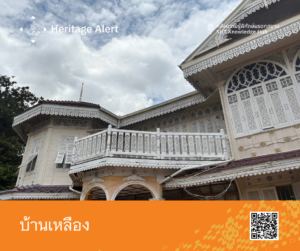
An important contribution of the Heritage Alert system is its role in gathering, organising and disseminating information that communities, government agencies and relevant organisations can use to inform further consideration and action. In this case, community members compiled a range of supporting evidence, including local histories, the significance of historic buildings, archival photographs, land ownership documents, maps, construction plans and project details. They also documented the specific nature and potential risks to each heritage site.
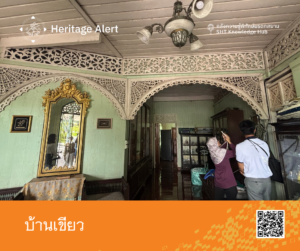 This documentation helps translate community concerns into evidence-based information that can be verified and used by heritage authorities, government agencies, human rights organisations, academics and civil society groups. Importantly, this Heritage Alert case also highlights the connections between individual heritage sites, rather than treating each building or place in isolation. What the communities seek to safeguard is not simply a collection of old houses and religious sites, but the history of settlement and the cultural landscape that generations have collectively shaped and sustained.
The story of Bang Phlat’s riverside communities reminds us that the Chao Phraya riverfront should not be viewed merely as land for development projects. Many of these areas hold records of Bangkok’s formation and history, reflecting patterns of migration and settlement, economic and political developments, trade, relationships between people of different faiths, and ways of life shaped by the river.
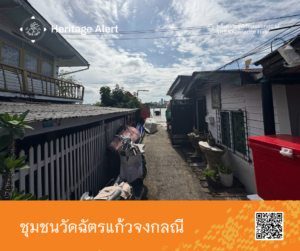 Safeguarding this heritage is therefore not solely the responsibility of building owners or the communities who live there, but a matter of concern for the city and society as a whole. The heritage of any one community forms part of the city’s wider history and collective memory. Urban development and cultural heritage conservation need not be conflicting objectives, provided that development processes genuinely allow knowledge, history and community voices to help shape the city’s future.